Curiosity & imagination
Openness
How a child responds to new ideas, experiences and creative possibilities.
Personality assessment for ages 8–14
The Know Your Child Assessment uses the Big Five framework to compare your child's view with yours. The report turns those two perspectives into a clear picture of tendencies, strengths and practical ways to support them.
₹499 · Included with Annual Membership · Child and parent each answer separately
What it explores
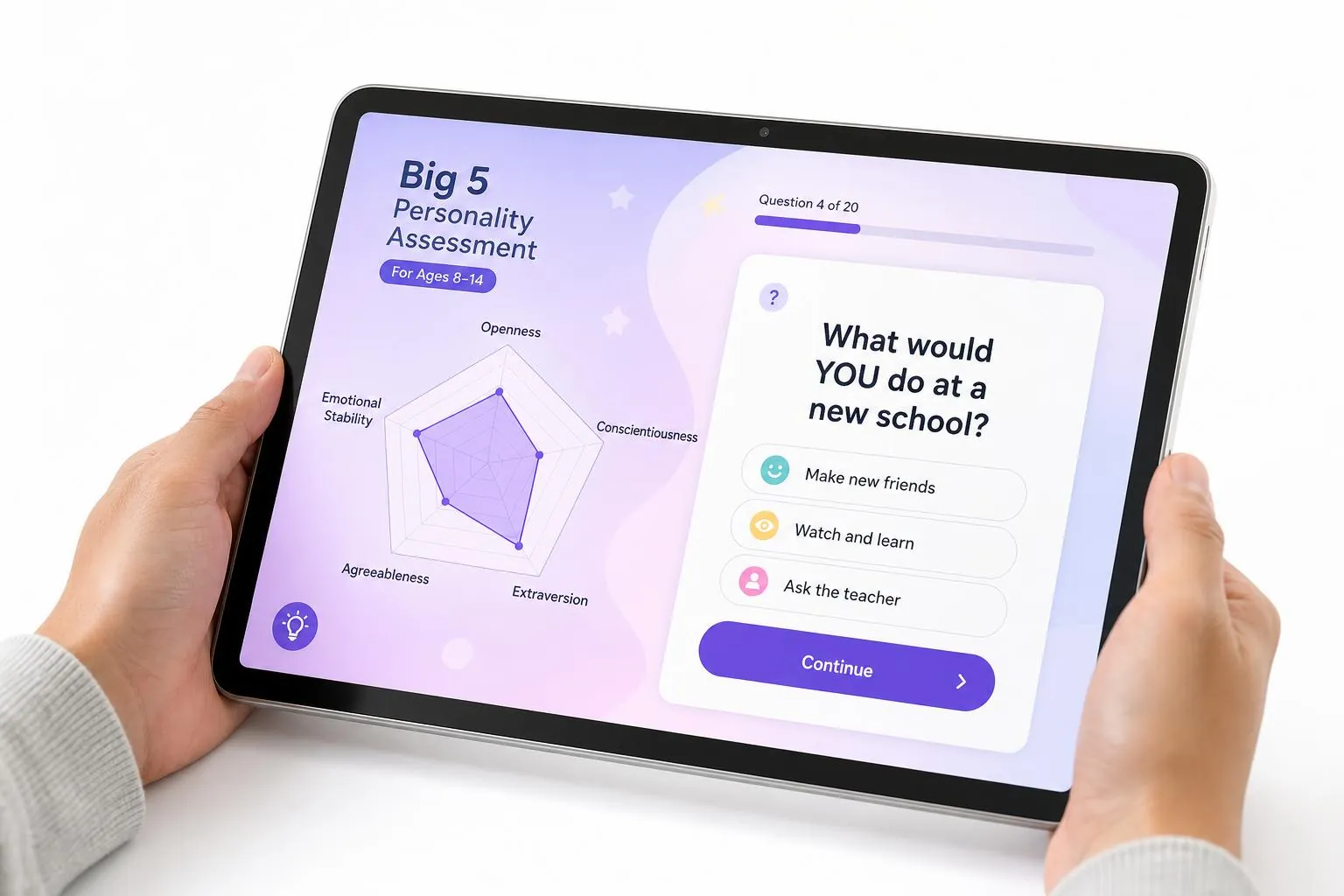
The Big Five describes personality across five broad dimensions. It does not place children into fixed types, and neither end of a dimension is automatically better.
Openness
How a child responds to new ideas, experiences and creative possibilities.
Conscientiousness
How a child plans, follows through and manages everyday responsibilities.
Extraversion
How a child gains energy from people, conversation and active situations.
Agreeableness
How a child cooperates, considers others and handles shared situations.
Emotional stability
How strongly a child reacts to stress and how they regain their balance.
Two perspectives, one report
Age-appropriate situations help them describe how they usually think, feel and respond.
You respond to the same kinds of situations based on what you have observed.
See where perspectives align, where they differ, and practical conversation starters for home.
Sample report
Example child and parent responses
The assessment describes current personality tendencies. It is not a clinical test, diagnosis or prediction of your child's future. Children continue to develop, and context can influence how they answer.
Explore the assessment